Featured Speakers
We’re heading to San Antonio for the 2026 AANS Annual Scientific Meeting, and the speaker lineup is shaping up to be one of our best yet. This year is all about breaking down barriers and bringing together the brightest minds in neurosurgery to challenge the status quo and share fresh perspectives. Between the high-energy sessions and the unique charm of the San Antonio River Walk, it’s going to be an incredible week of learning and connection. Dive into our featured speakers below and get ready for an intellectual adventure that will leave you inspired and ready for what’s next in our field.

In Order of Appearance
Hailey Mullican, JD
Louise Eisenhardt Lecture
TBD
Vice President, Legal Affairs and Chief Legal Officer
The University of Texas, San Antonio
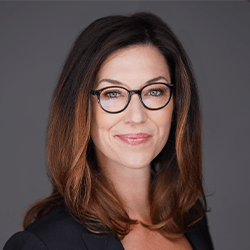
Hailey Mullican, JD, is the inaugural Vice President for Legal Affairs and Chief Legal Officer of the newly accredited University of Texas at San Antonio (UTSA), bringing extensive experience from her roles as VP for Legal Affairs and Chief Legal Officer and Managing Legal Counsel at UT Health San Antonio since 2018. As general counsel, she leads a team providing full-scope legal and strategic counsel across the institution’s education, patient care and research missions. Ms. Mullican holds a JD from St. Mary’s University School of Law and a BA in Political Science, summa cum laude, from Abilene Christian University and is admitted to practice in Texas and the U.S. District Court for the Western District of Texas.
Kevin Foley, MD, FAANS, FACS
Rhoton Family Lecture
TBD
Professor, Department of Neurosurgery, Orthopedic Surgery and Biomedical Engineering,
University of Tennessee Health Science Center; Chairman, Semmes Murphey
Clinic; Chairman and Medical Director, Medical Education & Research Institute (MERI)
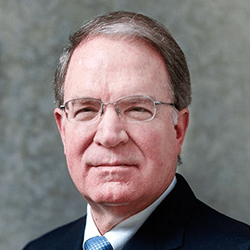
Dr. Kevin Foley is a tenured Professor of Neurosurgery and Orthopedic Surgery & Biomedical Engineering at the University of Tennessee Health Science Center, serving as Chairman of the Semmes Murphey Clinic and Medical Director for the MERI. His distinguished career includes service as Lieutenant Colonel and Chief of Neurosurgery at Walter Reed Army Medical Center. He is a prolific inventor, holding over 180 U.S. patents for innovations in areas like minimally invasive spinal surgery and image-guided techniques. His inventive work and research, which includes over 270 publications, earned him the AANS Cushing Award (2019) and the World Federation of Neurosurgical Societies William Beecher Scoville Award (2023).
Samuel Browd, MD, PhD, FAANS
Theodore Kurze Lecture
TBD
Professor of Neurological Surgery, University of Washington and Attending Neurosurgeon, Seattle Children’s Hospital
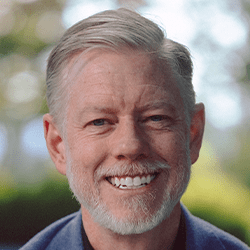
Dr. Samuel Browd is Professor of Neurological Surgery at the University of Washington and Attending Neurosurgeon at Seattle Children’s Hospital. He was recognized as the 2021 Congress of Neurological Surgeons Innovator of the Year. He has co-founded multiple venture-backed startups including VICIS, Proprio, Aqueduct Neuroscience, NeuFluent and DeepWell. He also co-developed three products listed as TIME Magazine’s Invention of the Year (2017, 2019 and 2021), Fast Company’s Most Innovative (2024) and Fast Company’s World Changing Ideas (2025). Through Digital Fluency, he has partnered with the AANS to advance neurosurgical education in AI, immersive medicine, surgical robotics and digital innovation.
Eric Leuthardt, MD
Hunt-Wilson Lecture
TBD
Shi Huang Professor, Department of Neurological Surgery, Washington University
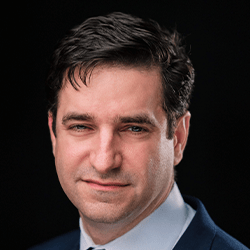
Eric Leuthardt, MD, is the Shi Huang Professor of Neurological Surgery and Vice Chancellor of Commercialization at Washington University in St. Louis. A pioneer in neurotechnology, Dr. Leuthardt holds over 1,600 patents and has founded eight startup companies. His high-impact innovations include the first FDA-approved brain-computer interface for strokes and the use of ultrasound for non-invasive brain biopsies. In addition to publishing 200 peer-reviewed papers, he is an Emmy Award-winning playwright and the author of two novels.
Murat Günel, MD, FAANS
Richard C. Schneider Lecture
TBD
Sterling Professor & Chair of Neurosurgery, Professor of Neuroscience and Genetics, Yale School of Medicine
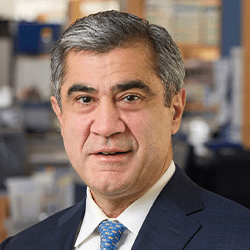
Murat Günel, MD, FAANS, is the Sterling Professor and Chair of Neurosurgery at Yale School of Medicine, and a Professor of Neuroscience and Genetics. A highly regarded physician-scientist, Dr. Günel uses large-scale genomic and multi-omic strategies to define the causes of neurological diseases and translate those findings into clinical solutions. His research has clarified the molecular basis of structural brain disorders including mTOR activation pathways, cerebrovascular diseases (cavernous malformations, aneurysms) and defined molecular subtypes in brain tumors (meningiomas). More recently, he is leading teams developing computational models and neuromodulatory interventions for autism and related neurodevelopmental disorders to improve communication and function.
Alim Louis Benabid, MD, PhD
Van Wagenen Lecture
TBD
Full Professor of Biophysics, Grenoble Joseph Fourier University
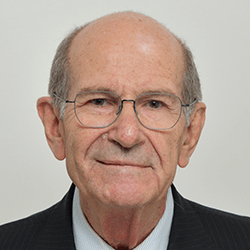
Alim Louis Benabid, MD, PhD, who studied at Grenoble Joseph Fourier University, is a distinguished neuroscientist and Full Professor of Biophysics. His landmark work involved the discovery and development of High-Frequency Deep Brain Stimulation (HF DBS) as surgical therapy. HF DBS utilizes the inhibitory properties of high-frequency electrical pulses in basal ganglia structures (like the Subthalamic Nucleus, STN) to modulate brain activity. This revolutionized the treatment of movement disorders, including Parkinson’s disease, Essential Tremor and Dystonia, and was later extended to manage conditions like epilepsy and certain forms of depression. Dr. Benabid was honored with the Lasker Prize and the Breakthrough Prize for these achievements. He also founded and developed the Clinatec Research Institute within the Grenoble Research Institute.
James Allison, PhD
Cushing Orator
TBD
Regental Professor and Chair of Immunology at MD Anderson and Founding Director of the James P. Allison Institute
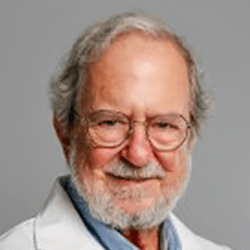
James Allison, PhD, is a 2018 Nobel Laureate and a pioneer in cancer immunotherapy whose discovery of immune checkpoint blockade revolutionized oncology. By identifying how molecules like CTLA-4 inhibit T cell responses, Dr. Allison developed the first FDA-approved checkpoint inhibitor, ipilimumab—a breakthrough that enables the immune system to recognize and eradicate cancer cells. Currently the Regental Professor and Chair of Immunology at MD Anderson and Founding Director of the James P. Allison Institute, he continues to lead research into next-generation therapies. A member of the National Academies of Sciences and Medicine, his work has earned numerous prestigious honors, including the Lasker-DeBakey and Breakthrough Prizes.
2026 AANS Annual Scientific Meeting | San Antonio
May 1-4, 2026